What is GEO: Defining Generative Engine Optimization for Founders
Generative Engine Optimization (GEO) is the process of optimizing digital content to increase its visibility, citation frequency, and accuracy within generative AI systems. Unlike traditional SEO, which targets rank-ordered lists in search engine results pages (SERPs), GEO targets the synthesis engines of Large Language Models (LLMs) and AI-native search tools.
GEO focuses on the following primary AI systems:
- ChatGPT (OpenAI): Specifically the SearchGPT features and real-time browsing capabilities.
- Gemini (Google): The integration of generative overviews within standard search and standalone assistant interfaces.
- Perplexity AI: The answer engine that prioritizes real-time web indexing and source citations.
- Claude (Anthropic): Systems utilizing tool-use and web-search capabilities to inform user responses.
- Search Generative Experience (SGE): The evolving interface of traditional search engines that prioritizes AI-generated summaries over blue links.
Founders must treat GEO as a technical engineering lever rather than a creative marketing exercise. AI systems do not "read" content like humans; they tokenize data, map semantic relationships, and retrieve information based on vector similarity and citation reliability. Olwen provides the infrastructure to monitor these systems and deploy the technical fixes required to maintain brand visibility.
The Three Pillars of GEO
To win in AI search, your technical stack must address three distinct areas: crawlability, semantic relevance, and citation authority.
1. Technical Crawlability and Bot Management
AI systems use specific crawlers to ingest data for both model training and real-time retrieval. If your site blocks these bots or fails to provide a clear path for data extraction, your brand disappears from the AI's knowledge base.
Key crawlers to monitor in your CDN logs include:
- GPTBot / OAI-SearchBot: OpenAI’s primary agents for training and real-time search.
- Google-InspectionTool: Used by Gemini to parse content for search generative summaries.
- PerplexityBot: The dedicated crawler for the Perplexity answer engine.
- Claude-Web / Anthropic-AI: Agents used by Anthropic to verify real-time data.
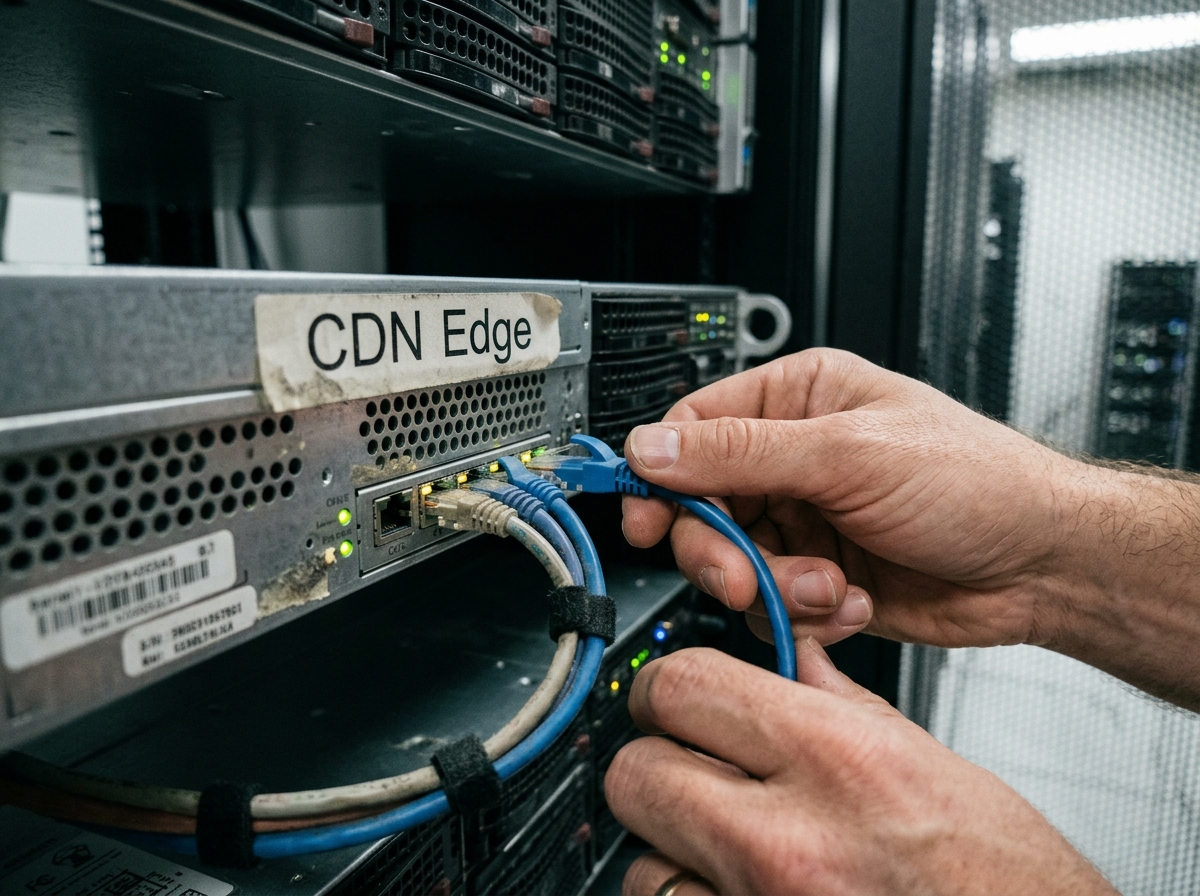
Olwen tracks these AI crawler visits via connected CDN workflows. By analyzing these logs, you can identify which parts of your site AI systems ignore and which pages they prioritize. This data allows you to adjust your robots.txt and server-side rendering (SSR) settings to ensure AI bots access high-value product pages and documentation.
2. Semantic Relevance and Vector Mapping
AI systems do not rely on keyword density. They use embeddings—numerical representations of text in a high-dimensional vector space—to determine if your content answers a user's query.
To improve semantic relevance, you must move from "keyword-first" to "entity-first" content. This involves:
- Defining Entities: Clearly stating what your product is, who it is for, and the specific problems it solves using industry-standard terminology.
- Contextual Linking: Using internal links that describe the relationship between two concepts (e.g., linking a "GEO" page to a "Structured Data" page with descriptive anchor text).
- FAQ Sections: AI systems frequently pull direct answers from FAQ blocks. Olwen generates these sections automatically based on the gaps identified in current AI responses.

3. Citation Authority and Source Verification
Perplexity and SearchGPT prioritize content they can cite. An AI system is more likely to recommend your brand if it finds consistent information across multiple authoritative sources.
Citation authority is built through:
- Structured Data (Schema.org): Providing a machine-readable map of your content.
- Third-Party Mentions: Ensuring your brand is mentioned in industry repos, news sites, and technical documentation.
- Consistent Metadata: Maintaining identical brand facts (pricing, features, headquarters) across your site and external directories.
Structured Data: The Language of AI Search
AI systems prioritize structured data over unstructured prose because it eliminates ambiguity. While a human might infer that a price is $50 from a paragraph, an AI system knows it is $50 because the Product schema explicitly defines the price and priceCurrency properties.
To optimize for GEO, your site must implement the following JSON-LD types:
| Schema Type | Purpose for GEO |
|---|---|
Organization | Defines your brand name, logo, and official social profiles to prevent AI hallucinations. |
Product | Provides specific attributes (price, availability, features) for AI comparison engines. |
TechArticle | Signals to AI that your content is a technical resource, increasing its weight in technical queries. |
FAQPage | Directly feeds the "Answer" boxes in Perplexity and Gemini. |
SoftwareApplication | Essential for MarTech companies to define integration capabilities and operating systems. |
Olwen automates the generation and deployment of this schema. By connecting your repo and CMS, Olwen injects updated JSON-LD directly into your headers, ensuring AI crawlers always find the most current data without requiring manual developer tickets.
Moving from SEO to GEO: Technical Shifts
Traditional SEO focuses on backlinks and page speed. While these remain important, GEO requires a shift toward data accessibility and semantic clarity.
From Keywords to Intent Clusters
Instead of targeting "best marketing automation tool," GEO targets the intent behind the query. An AI system might receive a prompt like: "Find me a marketing tool that integrates with Slack, costs under $500/month, and has a focus on AI search visibility."
If your content doesn't explicitly list these attributes in a way an LLM can parse, you will not be included in the response. Olwen monitors competitor visibility in these specific types of long-tail AI prompts to identify where your brand is being excluded.
From Page Rank to Citation Rank
In the AI era, being the third link on Google is less valuable than being the primary citation in a ChatGPT response. AI systems look for "consensus" across the web. If five different authoritative sites describe your tool as a "GEO platform," the AI will categorize you as such. Olwen tracks brand mentions across AI systems to ensure your brand category is being correctly identified and cited.

The Olwen Workflow: Monitor, Fix, Publish
Lean teams cannot afford a separate GEO workflow. Olwen integrates GEO into your existing development and content cycles.
- Monitor: Connect your CDN and search console to Olwen. The platform tracks which AI bots are visiting your site and how your brand appears in generative responses compared to competitors.
- Generate Fixes: Olwen identifies technical gaps, such as missing schema, broken metadata, or content that is semantically weak. It generates the necessary code snippets and FAQ sections.
- Publish via Repo/CMS: Olwen connects directly to your GitHub repo or CMS (e.g., Contentful, WordPress). It pushes the technical fixes and AI-optimized articles directly to your production environment.
This automated loop ensures that your site evolves as AI models are updated. When a new model like GPT-5 or a new version of Gemini changes how it parses data, Olwen detects the shift in crawler behavior and suggests immediate adjustments to your structured data.
Tracking AI Crawler Visits via CDN
Standard analytics tools like Google Analytics are insufficient for GEO because they rely on JavaScript execution and user sessions. AI crawlers do not execute JavaScript in the same way users do, and they don't trigger standard tracking pixels.
To see the full picture, you must monitor server-side logs. Olwen connects to CDN providers (Cloudflare, Akamai, Vercel) to capture raw request data. This allows you to see:
- Crawl Frequency: How often OpenAI or Perplexity updates their index of your site.
- Crawl Depth: Which subdirectories (e.g.,
/blogvs/docs) are being prioritized by AI models. - Response Codes: Ensuring AI bots aren't hitting 404s or 403s on critical data pages.
By treating AI bots as a priority user segment, you ensure that the "brain" of the AI search engine has the most accurate and comprehensive view of your product.
Improving Metadata and Structured Data for LLMs
Metadata is no longer just for click-through rates. For LLMs, metadata serves as the primary summary of a page's intent.
- Title Tags: Must be descriptive and include the primary entity name.
- Meta Descriptions: Should act as a concise abstract of the page content, providing the AI with a quick summary to verify against the page body.
- Open Graph Tags: While originally for social media, AI systems use OG tags to pull images and primary descriptions for visual generative results.
Olwen’s AI-optimized article generator ensures that every piece of content published includes a full suite of metadata and structured data, pre-validated for LLM consumption.
Checklist: Evaluating Your Current AI Brand Presence
Use this checklist to determine your brand's readiness for generative search. If you cannot answer "yes" to these points, your GEO strategy is incomplete.
- Bot Access: Have you verified in your CDN logs that
GPTBotandPerplexityBotare not being blocked by your firewall orrobots.txt? - Schema Validation: Does your homepage contain
Organizationschema with a definedsameAsattribute linking to your official profiles? - Citation Check: When you ask Perplexity "What are the top tools for [Your Category]?", does your brand appear with a citation link to your website?
- Semantic Clarity: Are your product features listed in clear, declarative sentences (e.g., "Olwen tracks AI crawler visits") rather than vague marketing speak (e.g., "Unlock deep insights into the future of search")?
- Competitor Benchmarking: Do you know which specific pages your competitors are using to win citations in Gemini or SearchGPT?
- Automated Publishing: Is your technical SEO/GEO updated automatically via your repo, or does it require a manual sprint every time a change is needed?
- Structured FAQ: Do your high-traffic pages include
FAQPageschema that answers the most common questions found in AI search prompts?
Direct technical intervention is the only way to secure brand visibility in AI systems. Olwen provides the monitoring and automation tools to execute these fixes at scale.