Turning Competitor Wins into Schema Updates: A GEO Workflow

Olwen tracks where AI systems mention your brand and where competitors are winning. In the current landscape, visibility is no longer a ranking on a page; it is a citation in a synthesized response. As of April 2026, data shows that 83% of AI Overview citations come from pages outside the organic top 10. If you are relying on traditional SEO to maintain market share, you are losing traffic to competitors who have optimized for Generative Engine Optimization (GEO).
This workflow maps the technical steps to monitor competitor citations in frontier models like GPT-5.4, Claude Opus 4.6, and Gemini 3.1 Pro, and convert those insights into automated website fixes.
Monitor: Setting Alerts for AI Citations
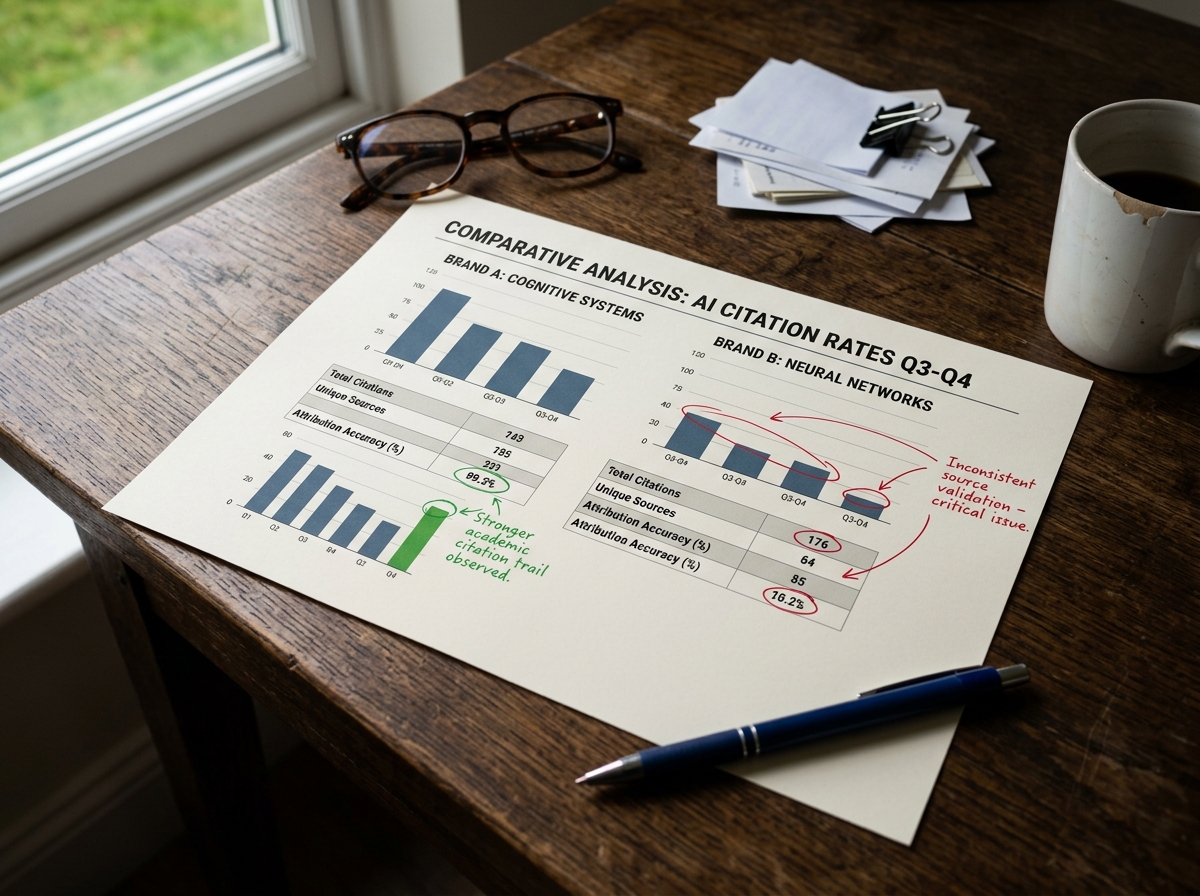
Traditional rank tracking does not capture the conversational context of AI search. You must monitor the specific queries where AI systems recommend a competitor over your brand.
- Identify High-Value Intent Queries: Focus on "best of" or "how to" queries where your product should be the primary recommendation.
- Configure Olwen Alerts: Set up monitoring for ChatGPT Search, Perplexity, and Google AI Overviews. Olwen uses headless instances to trigger these responses and scrape the citations.
- Segment by Sentiment: Filter results to find instances where a competitor is cited as the "leader" or "best choice" while your brand is either mentioned as an alternative or omitted entirely.
Tracking these mentions allows you to see the exact source material the AI is using. If Perplexity cites a competitor’s blog post from three days ago, you have a freshness gap. If ChatGPT cites a competitor’s documentation, you have a structured data gap.
Extract: Analyzing the Competitive Advantage
When an AI system cites a competitor, it does so because that competitor’s content was easier to retrieve and synthesize. You must extract the technical reasons for this preference.
Citation Source Analysis
AI systems prioritize sources that provide high factual density and clear entity relationships. Analyze the competitor’s cited page for:
- Claim-Level Specificity: Does the page use short, declarative sentences that are easy for an LLM to extract?
- Structured Data Alignment: Is the page using specific Schema.org types that match the query intent?
- Entity Disambiguation: Does the competitor use
@idandsameAsproperties to link their brand to authoritative nodes like LinkedIn or Wikidata?
Context Window Relevance
Frontier models like Claude Opus 4.6 have context windows reaching 1 million tokens, but they still prioritize the most relevant "chunks" retrieved via RAG (Retrieval-Augmented Generation). If a competitor’s page is structured with clear H2 and H3 tags that mirror the user’s prompt, the AI is more likely to select that passage for its response.
Generate: Creating FAQ Sections and Schema Fixes
Once you identify why a competitor is winning, use Olwen to generate the necessary website updates. This is not about keyword stuffing; it is about providing the "Truth Anchors" that AI systems require for verification.
Automated FAQ Generation
If competitors are winning because they answer specific long-tail questions, generate an FAQ section that addresses those gaps.
- Direct Answers: Ensure each answer is between 40 and 60 words.
- Factual Density: Include at least two verifiable statistics or data points per answer.
- Primary Content Rule: Following the March 2026 Google update, FAQ schema must describe the primary purpose of the page. Do not add generic FAQs to product pages; create dedicated, high-utility FAQ blocks that serve the user first.
Schema Stacking
Move beyond basic Organization schema. Implement "Schema Stacking" to provide a dense map of your brand’s expertise. Use Olwen to generate JSON-LD blocks that include:
knowsAbout: List specific technical topics your brand is an authority on.mentions: Explicitly link to the entities, technologies, or industry standards your product interacts with.isRelatedTo: Define relationships between your products and broader category terms.
Example of an AI-optimized Schema block:
{
  "@context": "https://schema.org",
  "@type": "Product",
  "name": "Olwen GEO Suite",
  "@id": "https://www.olwen.io/#product",
  "brand": {
    "@type": "Brand",
    "name": "Olwen",
    "sameAs": ["https://www.linkedin.com/company/olwen"]
  },
  "knowsAbout": ["Generative Engine Optimization", "Structured Data", "AI Search"],
  "description": "Olwen improves brand visibility in AI systems by automating schema updates and content fixes."
}
Ship: Automated Publishing via Repo and CMS
Speed is a ranking factor in GEO. AI systems have a strong recency bias, often preferring content updated within the last 7–14 days. Manually updating pages is too slow for a lean team.
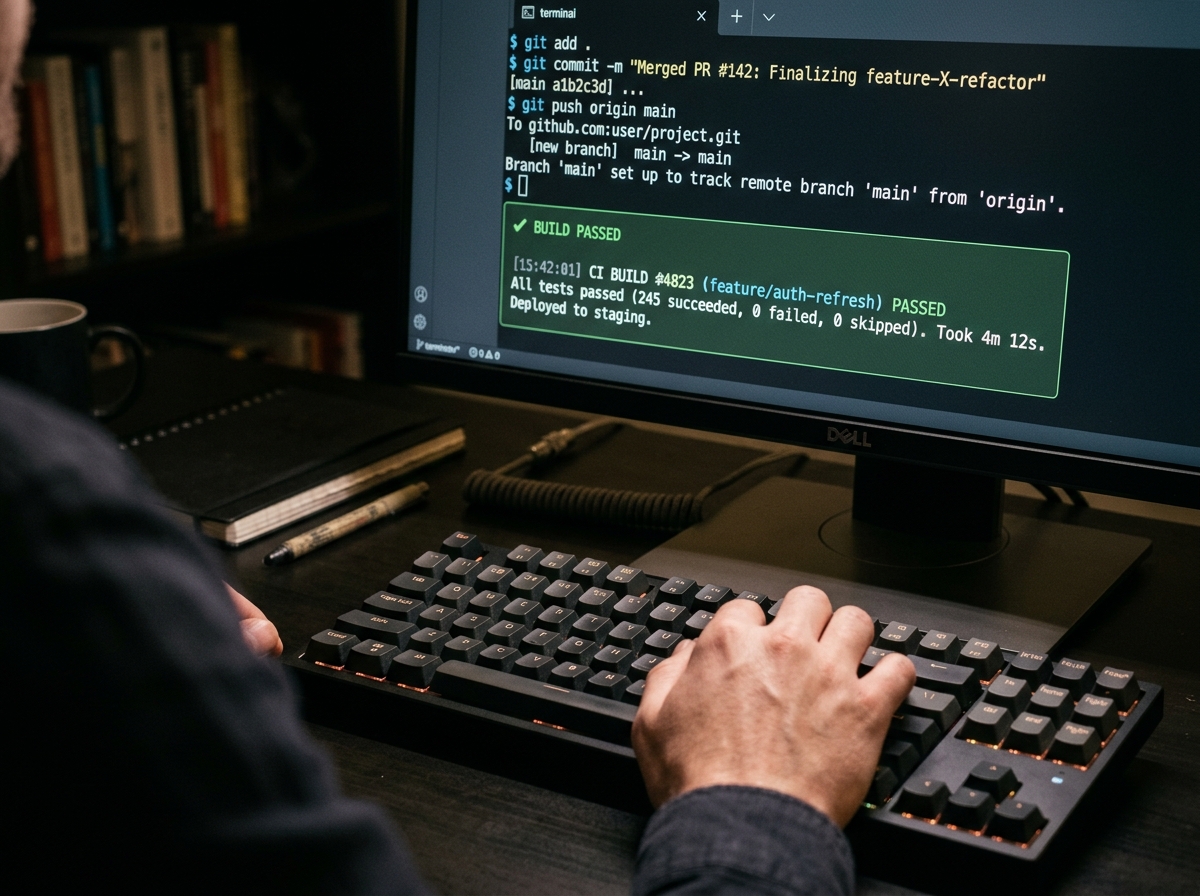
- Connect Your Repo: Link Olwen to your GitHub or GitLab repository. Olwen generates pull requests (PRs) containing the new JSON-LD blocks and FAQ content.
- CMS Integration: For non-technical pages, connect Olwen to your CMS (Contentful, Webflow, or WordPress) via API.
- Automated Approval Workflows: Set rules to automatically merge schema updates while flagging content changes for human review. This ensures your technical metadata stays fresh without risking brand voice consistency.
By automating the "Identify -> Fix -> Ship" cycle, you turn competitor wins into immediate opportunities to reclaim visibility. When a competitor launches a new feature and starts winning citations, Olwen detects the shift and prepares the counter-content before your next sprint begins.
Track: Monitoring AI Crawler Visits and Shifts
After shipping fixes, you must verify that AI systems are consuming the new data. Traditional analytics often misattribute AI crawler traffic as "Direct" or "Other."
Identify AI Crawlers
Monitor your CDN logs (Cloudflare, Akamai, or Vercel) for specific User-Agent strings. As of 2026, these are the primary bots to track:
- OAI-SearchBot / GPTBot: OpenAI’s crawlers for ChatGPT Search and model training.
- PerplexityBot: The crawler for Perplexity’s answer engine.
- Googlebot: Still used for Google AI Overviews and Gemini-powered search.
- ClaudeBot: Anthropic’s crawler for real-time retrieval.
Measure the Shift
Track the "AI Share of Voice" (ASOV) for your target queries. Olwen provides a dashboard that compares your citation frequency against competitors over time.
| Metric | Definition | Target (2026 Benchmark) |
|---|---|---|
| Citation Frequency | How often your brand is cited in AI responses. | >30% for category queries |
| Sentiment Score | The tone AI systems use when describing your brand. | Neutral to Positive |
| Zero-Click Displacement | Traffic lost or gained from AI answer formats. | Positive Net Gain |
| Entity Resolution Rate | How often AI correctly identifies your brand @id. | >90% Accuracy |
If your Citation Frequency increases but your Sentiment Score drops, the AI may be citing you as a "negative example" or an "expensive alternative." Use Olwen to refine the FAQ sections to address these specific positioning gaps.
Technical Deep Dive: Entity Disambiguation
AI systems struggle with ambiguity. If your brand name is a common word, the LLM may fail to attribute a mention to your company. This is where the @id property becomes the most important technical lever in your repo.
By assigning a stable, canonical URI to your brand (e.g., https://www.yourbrand.com/#organization), you create a unique identifier that the AI can use to aggregate information from across the web. When Olwen generates your schema, it ensures that every page on your site references this same @id. This forces the AI to treat your website, your LinkedIn profile, and your Crunchbase entry as a single, authoritative entity.

Next Step: Audit Your Current AI Visibility
Start by running a baseline report in Olwen for your top five competitor-dominated queries. Identify the specific JSON-LD properties they are using to win citations and use the CMS connector to ship your first batch of schema updates. Monitor your CDN logs for OAI-SearchBot activity over the next 72 hours to confirm the new data has been indexed. This iterative cycle of monitoring and automated shipping is the only way to maintain a competitive edge in a search environment where the "blue link" is no longer the destination.