Auditing Brand Share of Voice in AI Systems vs. Legacy SEO Tools
High rankings in Google Search no longer guarantee brand visibility in the generative responses provided by ChatGPT, Gemini, or Perplexity. Legacy SEO tools like Semrush and Ahrefs measure keyword positions and backlink profiles, but these metrics fail to capture how Large Language Models (LLMs) synthesize information. To maintain market share, founders and marketing directors must shift from tracking SERP positions to auditing Brand Mention Frequency (BMF) within generative windows.
GEO (Generative Engine Optimization) targets the specific systems that summarize the web for users. While traditional SEO focuses on the blue link, GEO focuses on the citation. If an AI system summarizes your industry but omits your brand, your legacy SEO success is effectively invisible to a growing segment of users.
The Gap: Why SERP Rankings Don't Guarantee AI Citations
Traditional SEO operates on a retrieval model where the engine points to a source. Generative AI operates on a synthesis model where the engine creates a new response based on its training data and real-time web access (RAG - Retrieval-Augmented Generation). A brand can hold the #1 organic spot for "enterprise CRM" but be completely excluded from a ChatGPT recommendation if its site architecture lacks the structured data necessary for LLM ingestion.
Legacy tools measure "Share of Voice" based on click-through rate (CTR) estimates from keyword rankings. This is a proxy metric. In the generative era, the only metric that matters is the actual inclusion of your brand name and URL in the generated response. AI systems prioritize entities over keywords. If your brand is not recognized as a distinct entity with verified attributes, the LLM will default to competitors who have better-optimized metadata and clearer semantic relationships.
Metric Definition: Calculating Brand Mention Frequency (BMF)
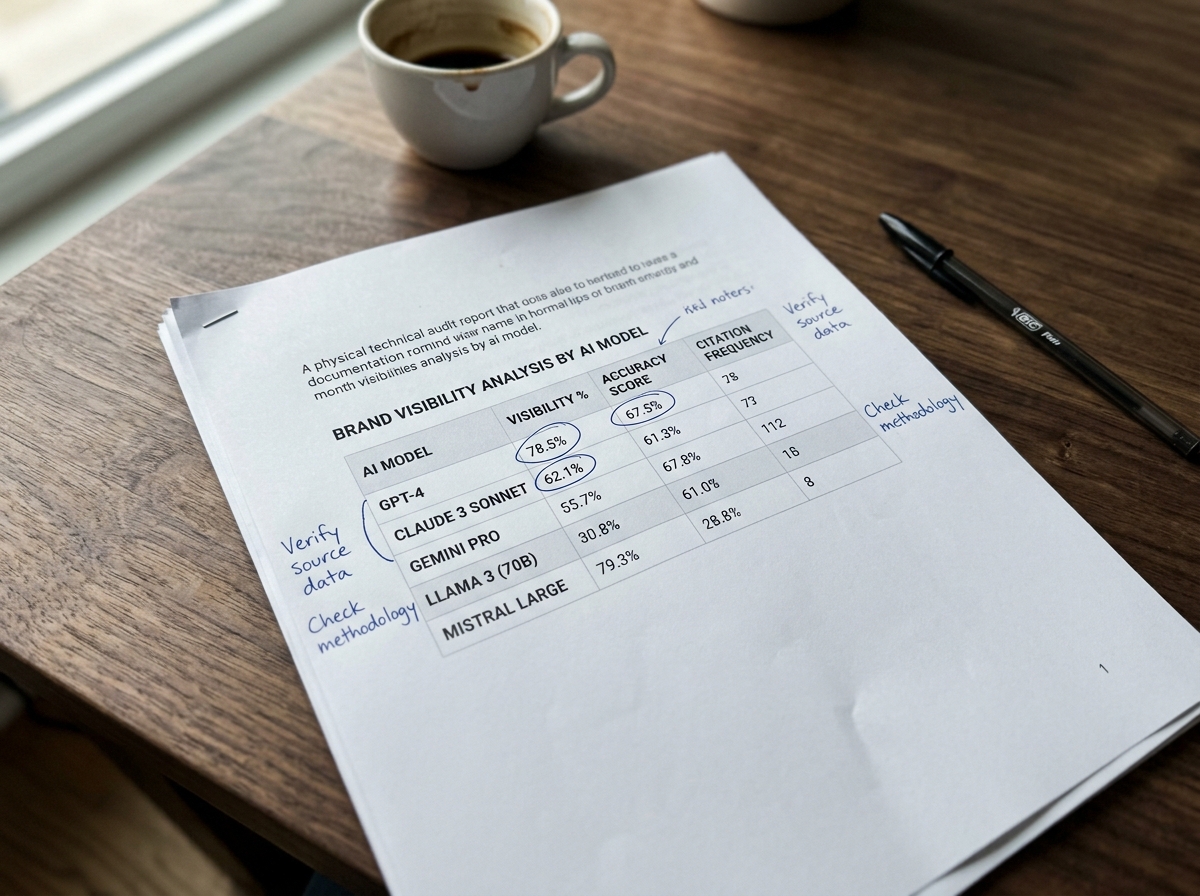
Brand Mention Frequency (BMF) is the percentage of generative responses in a specific category that include your brand as a primary recommendation or citation. Unlike keyword density, BMF accounts for the context of the mention.
To calculate BMF, you must track three specific data points:
- Direct Citations: The AI provides a link to your domain in the footnotes or as a source.
- Implicit Mentions: The AI mentions your brand name or product without a direct link.
- Competitor Displacement: The frequency with which a direct competitor is mentioned in queries where your brand should logically appear.
Olwen automates this tracking by querying frontier AI systems across your primary keyword clusters and calculating the BMF relative to your top five competitors. This provides a baseline of visibility that legacy SEO tools cannot see.
Workflow: Monitoring Competitor Visibility in AI Summaries
Monitoring visibility requires a shift from tracking "rankings" to tracking "contextual presence." Use Olwen to establish a monitoring workflow that identifies where competitors are winning the generative window.
Step 1: Identify High-Value Generative Queries
Focus on queries that trigger a summary or recommendation. These are typically "how-to," "best of," or "comparison" queries. Olwen identifies which of your target keywords trigger generative responses across different platforms (e.g., Perplexity vs. Google Search Generative Experience).
Step 2: Map Competitor Citations
Analyze the sources the AI uses to build its response. If an AI system consistently cites a competitor's blog post or documentation, that competitor has successfully optimized for the LLM's retrieval mechanism. Olwen tracks these citations and maps them back to the specific content structures the competitor is using.
Step 3: Analyze Sentiment and Attribution
It is not enough to be mentioned; the mention must be accurate. AI systems often hallucinate features or pricing. Olwen monitors the sentiment and factual accuracy of brand mentions, allowing you to identify where the AI's training data or RAG sources are outdated.
Action: Turning Competitor Wins into Website Fixes
When a competitor is cited instead of your brand, it is usually due to a gap in your site's technical structure or content depth. Olwen identifies these gaps and generates specific fixes to reclaim the citation.
Generate FAQ Sections and Structured Data
AI systems favor content that is easy to parse. If a competitor is winning because they have a clear "Pros and Cons" table or a detailed FAQ section, Olwen generates similar, higher-quality sections for your pages. These are not just for human readers; they are designed with the schema and metadata necessary for AI crawlers to ingest them as "facts."
Optimize Metadata and JSON-LD
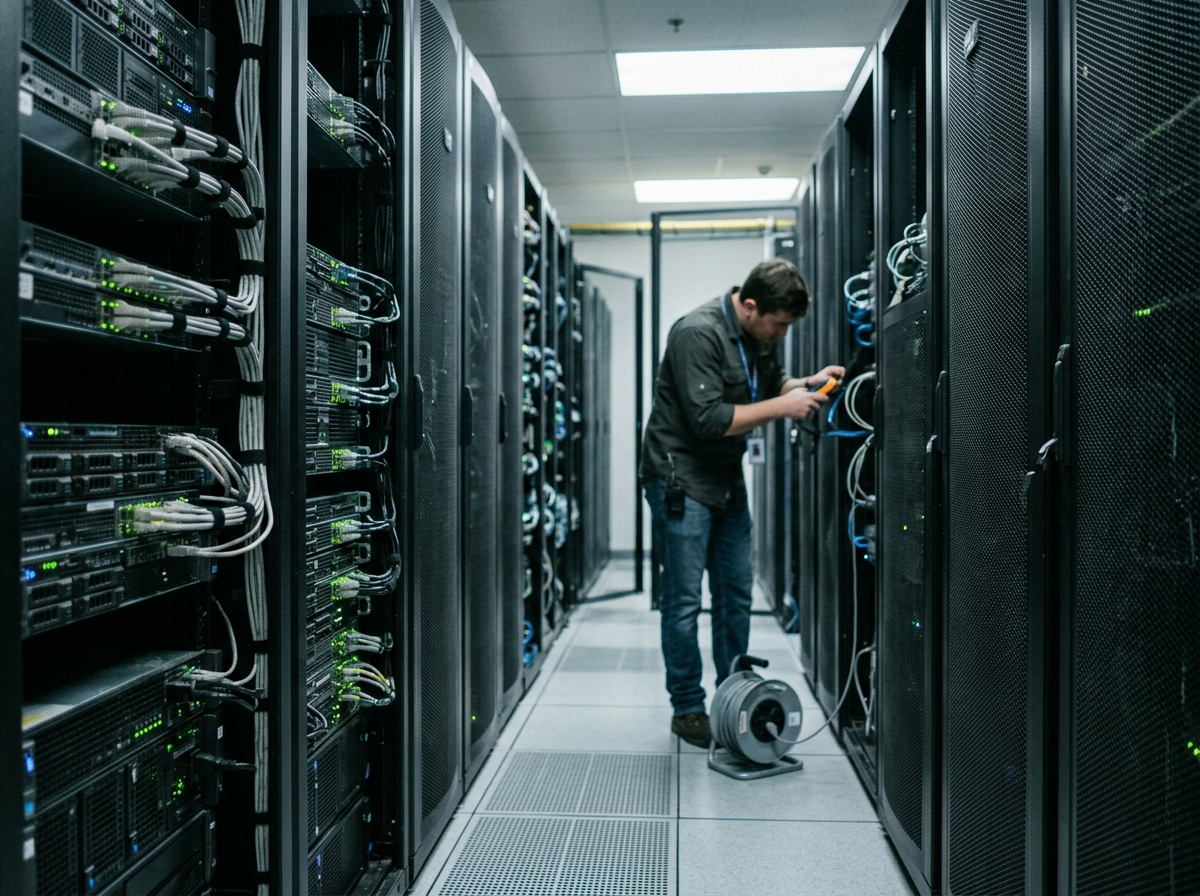
LLMs rely heavily on structured data to understand the relationship between entities. Olwen audits your existing JSON-LD and suggests improvements to your Organization, Product, and SoftwareApplication schema. By explicitly defining your brand's attributes in a machine-readable format, you increase the likelihood of being cited as a primary source.
Create AI-Optimized Articles
Traditional blog posts often use flowery language and indirect structures. AI-optimized content is direct and fact-dense. Olwen creates product pages and articles that follow the "inverted pyramid" of information, placing the most critical, citable facts at the top of the document where AI crawlers prioritize them.
Technical Implementation: Tracking AI Crawler Visits
To understand your GEO performance, you must know when and how AI systems are crawling your site. Traditional analytics tools often bucket AI crawlers under "Other" or "Bot" traffic, making it impossible to correlate site changes with AI visibility improvements.
Connect CDN Workflows
Olwen connects to your CDN (e.g., Cloudflare, Akamai) to track specific AI crawler user agents, such as GPTBot, OAI-SearchBot, and Claude-Bot. By monitoring these visits, you can see which pages are being indexed by AI systems in real-time. If a new product page isn't being visited by OAI-SearchBot, it won't appear in ChatGPT's real-time search results.
Monitor Repo and CMS Integration
Speed of implementation is critical. Olwen connects directly to your GitHub repository or CMS (e.g., Contentful, WordPress) to push updates. When Olwen identifies a missing schema property or a content gap, it can automatically create a pull request or a draft update. This removes the friction of manual SEO workflows and ensures your site is always optimized for the latest AI model updates.
Output: Weekly Brand Visibility Reporting
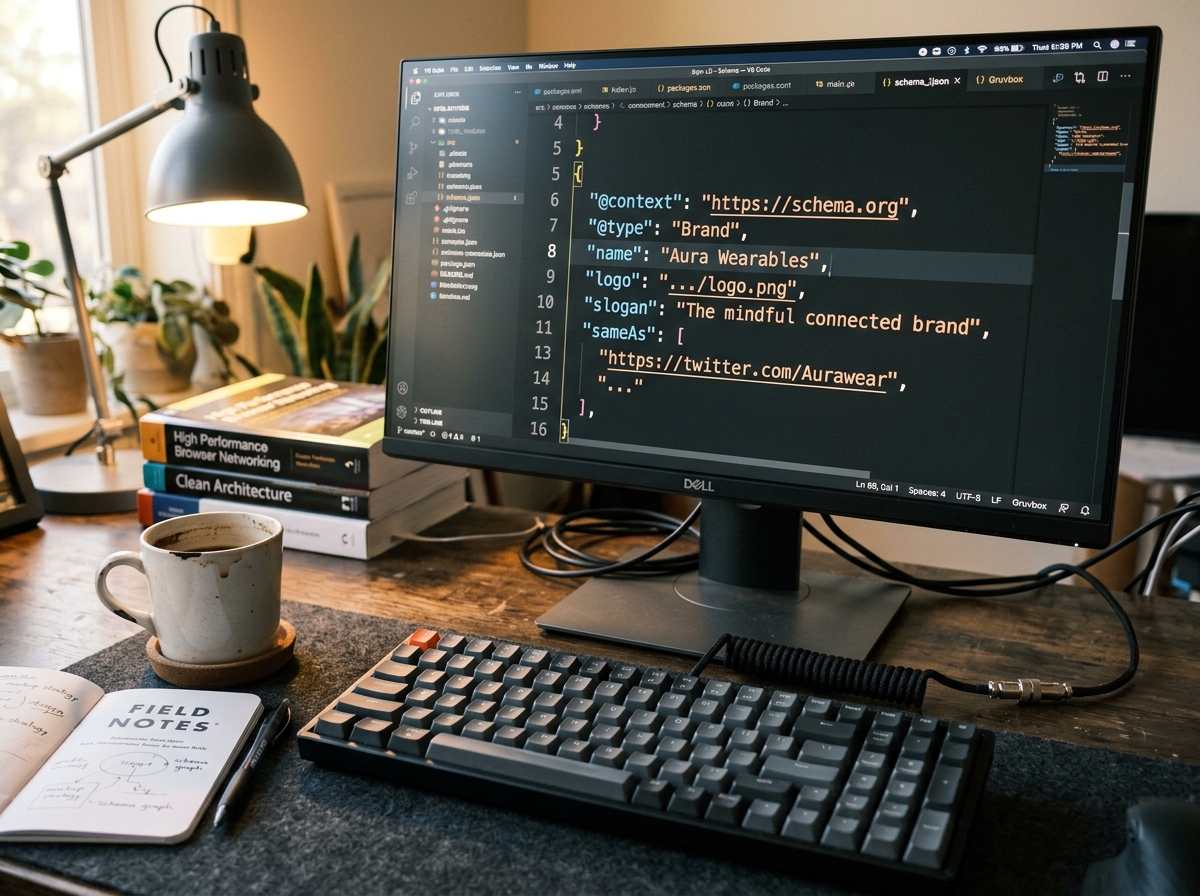
Founders and marketing directors need actionable data, not abstract metrics. Olwen provides a weekly Brand Visibility Report that replaces the standard SEO ranking report. This report includes:
- AI Share of Voice (SoV): Your brand's percentage of mentions across ChatGPT, Gemini, and Perplexity for your top 500 keywords.
- Citation Gap Analysis: A list of specific queries where competitors were cited and you were not, paired with the exact URL on your site that needs optimization.
- Crawler Activity Log: A summary of which AI bots visited your site and which sections they prioritized.
- Automated Fix Status: A log of schema and content updates pushed to your repo/CMS and their subsequent impact on BMF.
Comparison: Semrush vs. Olwen
| Feature | Legacy SEO (Semrush/Ahrefs) | GEO Platform (Olwen) |
|---|---|---|
| Primary Metric | Keyword Rank / Search Volume | Brand Mention Frequency (BMF) |
| Target System | Google/Bing Search Algorithms | LLMs (GPT-4, Claude, Gemini) |
| Data Source | SERP Scraping | Generative Response Auditing |
| Technical Focus | Backlinks & Keyword Density | Schema, Metadata & RAG Grounding |
| Automation | Manual Recommendations | Repo/CMS Automated Publishing |
| Crawler Tracking | General Bot Traffic | Specific AI User-Agent Monitoring |
Legacy tools are built for a world where users click links. Olwen is built for a world where users ask questions and receive answers. If your marketing stack only includes the former, you are missing the primary interface through which your customers now discover information.
Improving Metadata and Structured Data for RAG
Retrieval-Augmented Generation (RAG) is the process by which an AI looks up information before generating a response. To be the source of that information, your site must be "RAG-ready." This involves more than just having the information on the page; it requires the information to be formatted for high-confidence retrieval.
Olwen analyzes your site's internal linking and header hierarchy to ensure that AI systems can easily chunk your content. When an LLM "chunks" a page, it breaks it into small segments to find the most relevant answer. If your headers are vague (e.g., "Our Philosophy") instead of descriptive (e.g., "Olwen's GEO Automation Features"), the AI may skip the section entirely. Olwen identifies these descriptive gaps and suggests header changes that improve the retrieval score of your content.
By connecting your repo and CMS, Olwen ensures these technical improvements are deployed instantly. This creates a compounding effect: as your site becomes easier for AI to crawl and understand, your BMF increases, leading to more citations, which in turn signals to the AI that your brand is a high-authority entity in your space. This cycle is the core of modern growth engineering.